
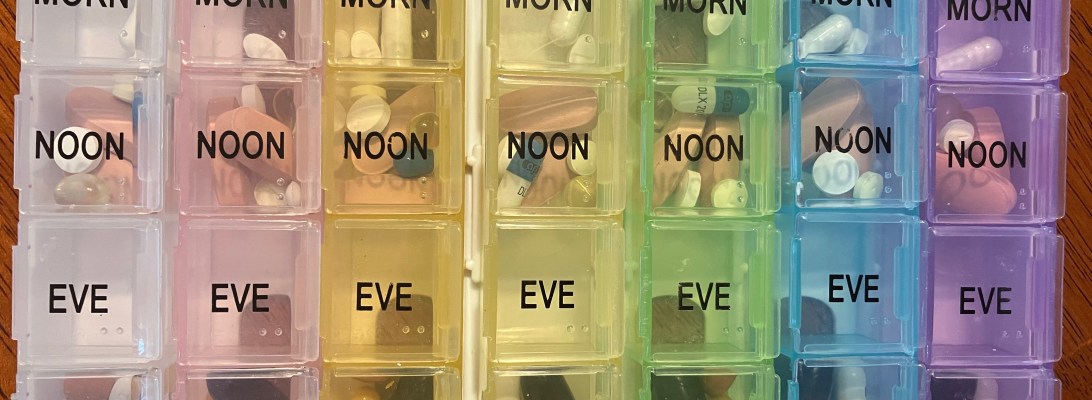
Today I…
- Refilled my pill boxes
- Chose how many days to continue taking the medicine I’m tapering off (may as well finish the bottle)
- Sent a message requesting my doctor transfer a prescription I haven’t used in a while to my new pharmacy
- Scheduled blood work for Monday (I didn’t realize I could do that entirely online!)
- Requested referral information because the endocrinologist hasn’t called yet
- Rearranged my bin of pills, moving the one I’m starting soon into the bin, taking one empty bottle out to sit on the table as a reminder, taking another empty bottle out because I’m done with it, and moving a final bottle to my medication archive in the room formerly known as my office.

That seems like a lot of decisions and things to keep track of, right? Now add on the fact that I have to budget my energy (this was a bunch of mental tasks) and using my eyes to place pills in tiny boxes causes an increase in my symptoms. Most weekends I get someone to help me, this weekend no one is around. I did a good job of doing things like opening all the lids without looking today! Symptoms weren’t much worse when I was done than before I started, which probably has more to do with the low pressure system, but I’m giving myself credit regardless! All of these decisions were based on information received during two appointments this past week (the referral from one, blood work and medication changes from the other). I added the tasks to my to do list during the appointments and then made decisions each day about what follow up needed to happen. I decided to prioritize launching this blog over doing any of the tasks that required writing messages, which meant I ended up picking up my new meds before even booking the blood test I’m supposed to do before starting them. It’s all getting done, eventually, and without over taxing myself.
Following up on instructions given during appointments isn’t the only type of care management I have to do. Usually people go to the doctor for annual check ups, get told they need to do a screening, and go on their way. Other times people go to the doctor with a particular complaint or a question.
People with chronic illnesses get asked what the goal of the appointment is. At my recent appointment with my PCP I was suggesting a diagnosis (ME/CFS), and bringing the printout of the CDC diagnostic criteria, having already checked that I have covered all aspects of the commonly used flow chart. And I alerted my doctor about this ahead of time so she can familiarize herself with the disease. I also took the time to update a 16 page summary of my illness in case that’s easier for her to navigate than the extensive list of appointments and notes in the online system. (She was on maternity leave so it’s been a while since I’ve seen her. One of the criteria for ME/CFS is fatigue lasting at least 6 months, I passed the 6 month mark while she was on leave.)

When I saw my PCP, who has truly been great, and asked if I qualify for an ME diagnosis (having read everything and knowing I meet all the criteria based on all the methods I could find). She said that usually a neurologist diagnoses. She then looked at the info in her system, and the CDC printout I brought with me, and agreed that I do meet the criteria. She then asked, “Does a diagnosis help you? Do you need it for disability?” And I’m just like… Don’t you give a diagnosis because I have the thing?? I have the diagnosis of “post covid chronic fatigue” which I kind of thought of as an interim diagnosis while we checked for all the other things and made it to the 6 month cutoff. I’m now at a year and just want to be counted correctly.

This isn’t the first time a doctor asked me if I needed a diagnosis, I’ve been on an extended journey to get a POTS diagnosis. I continue to be exceedingly thankful that my long covid didn’t start until the third year of this pandemic. Many people, notably young women, spend years getting told their symptoms are anxiety or are otherwise dismissed. Since so many people have traveled this road before me I know exactly what symptoms to watch for, what the corresponding diagnosis is, and through the magic of the internet and accessible medical devices, I can self diagnose. This leaves me positioned to access the care I need, although even with my multitude of privileges it’s a ton of hoops to jump. So I had a decision to make, do I want to jump those hoops to get an ME diagnosis?
I had an appointment with a neurologist the following week so I shared the situation in my long covid discord* and asked if I should push, and if so did they have a convincing argument why I should get the diagnosis documented?
I received several responses stating that a PCP can make this diagnosis, I deserve a diagnosis, and that others have also had to advocate for themselves including educating their providers. During the discussion I remember the long covid clinic saying that they only prescribe mestinon to people with ME, so that would be an argument for getting it in my chart. But other than that, it doesn’t impact me one way or another, and some people said that the diagnosis was used against them (ME/CFS has an awful history of being ignored and associated with psychosomatic symptoms, more on that in another post).
At the end of the discord discussion I posted: “Thanks everyone! It’s so much to have to get up early (which our bodies do not do!), travel to an appointment, answer all the questions, ask all my questions from a list I’ve been prepping for weeks, and then have to justify myself on top of it all. I appreciate the validation!”
When I looked at the notes my PCP had written up they said: “Patient asked about the possibility of a diagnosis of ME/CFS – we reviewed criteria and although patient does meet the criteria there is no change in management and patient may be eligible for more services (PT, OT, etc.) under the diagnosis of post-COVID chronic fatigue.”
I decided that was sufficient for the time being, I had too many other priorities to cover at my neurology appointment. I was disappointed though because my notes for the PCP appointment had said to get the ME diagnosis and then based on that request an accessible parking pass. I don’t need one all the time, but there are days that I don’t go out currently, that I could if I knew I could park right at my destination. Also sometimes it’s not optional, like I had a scheduled massage this week (that’s medically necessary to keep my body from turning into a giant knot – he described my shoulders as a rocky landscape – and that was at my regularly scheduled appointment! I cannot imagine what description I’d get if I skipped a month) and walking across the parking lot left me short of breath and my heart was racing. I have since printed the parking form and plan to bring it to my next appointment in October unless I get worse in which case I’ll send it digitally, I’m sure she’d complete it without me needing to go into the office.
In conclusion, having multiple chronic illnesses means having a never ending to do list of tasks to do, tasks to ensure others do for you, and information to gather. I had at least 104 appointments in the past year, which averages to two a week, and every one of those required both prep and follow up. Even the weekly appointments at the rehab center required me to send a text confirmation that I was attending and complete an online survey (updating information and covid guidelines) ahead of every appointment. Oh and we haven’t even touched on billing and insurance yet! Something to look forward to another day.
*If you have long covid or are the caretaker of someone with severe long covid, I can invite you to the discord. It’s a wonderfully supportive group of people who have a wealth of information to share.
 Tina Cardone